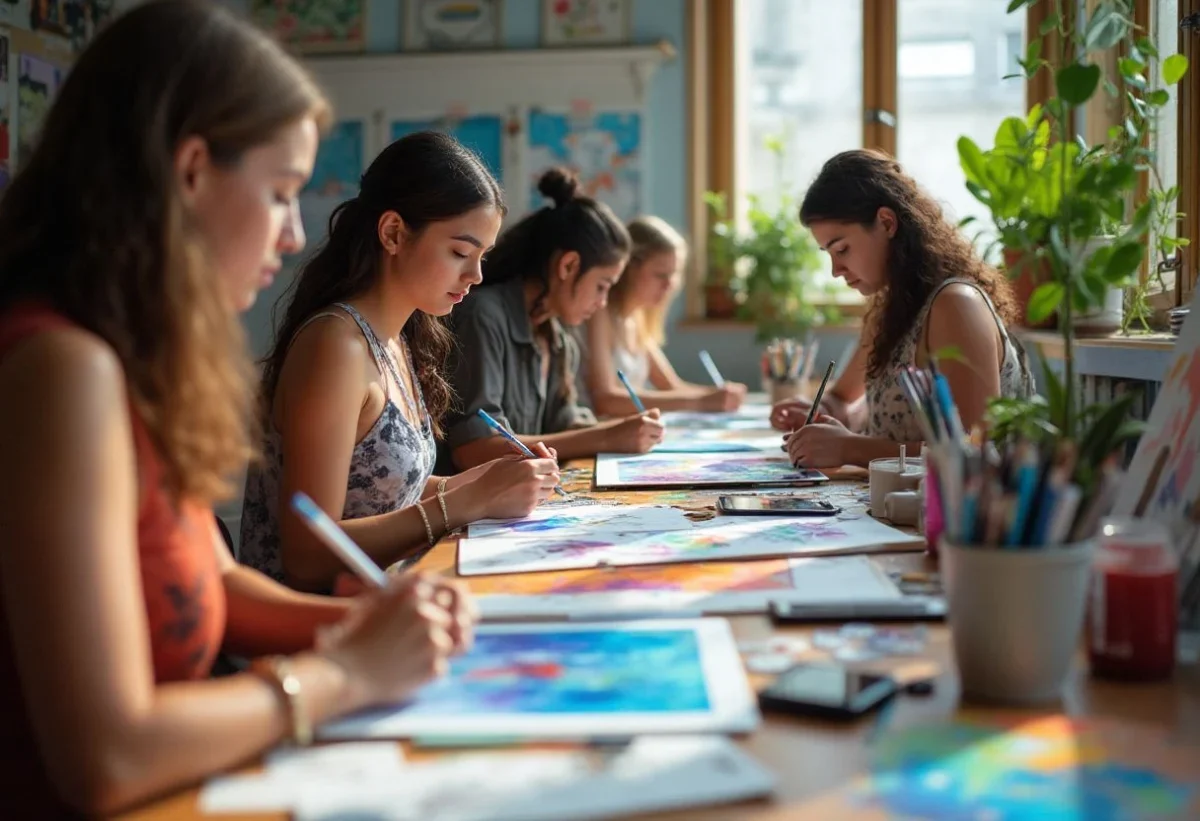
From the vibrant brilliance of colors on a canvas to the sweet melody of a well-tuned piano, art embraces all forms of human expression. An art school represents much more than walls and classrooms. It is a sanctuary where dreams come to life, a workshop where ideas take shape, and a community where every voice resonates with a unique palette. In the modern world where innovation is a precious currency, art stands as an indispensable pillar, a beacon illuminating the path toward personal and collective expression.
Origins and evolution of art schools
Art schools have a rich and varied history, reflecting the diversity and evolution of artistic styles over time.
- Originating from the workshops of Renaissance masters, these institutions have evolved to become centers of excellence.
- Over the centuries, they have broadened their horizons, moving from simple painting and sculpture to the inclusion of new disciplines such as graphic design and digital media.
- Each era has left its mark, influencing the techniques and philosophies taught.
The importance of art schools in contemporary society
In our ever-changing society, art schools play an indispensable role by encouraging creativity and providing a space for the development of new ideas.
By offering an education focused on innovation and critical thinking, they prepare students to face a constantly evolving world. These institutions train individuals capable of questioning the status quo and proposing artistic and cultural solutions to contemporary challenges. In an era where technology dominates many aspects of our lives, art reminds us of the importance of humanity and emotion.
The different disciplines and pedagogical methods
Art schools offer a variety of disciplines, allowing students to explore and specialize in areas that ignite their passion.
- Painting and drawing: from classical techniques to contemporary styles, students learn to master the tools and develop their own artistic voice.
- Sculpture: from stone to metal, through modern mediums, sculpture allows for a unique three-dimensional exploration.
- Graphic design: combining art and technology, this discipline trains creators capable of communicating visually in an effective manner.
- Digital media: new technologies open doors to innovative forms of expression, from animations to virtual reality.
Careers and opportunities after art school
Graduates of an art school benefit from a wide range of career opportunities, far beyond the traditional jobs one might associate with the artistic field.
Whether they choose to become artists, graphic designers, curators, or educators, their artistic training enables them to adapt and innovate. For example, many graduates find rewarding careers in fields such as film production, art restoration, and even in the fashion industry. Furthermore, the skills acquired can also be applied in broader contexts, such as product development and design school.
Art schools remain beacons of creativity and personal discovery. They welcome open minds, ready to explore new horizons, and offer valuable tools to navigate the complex and ever-evolving world of art. In a global landscape where individual expression becomes essential, these institutions play an invaluable role, inspiring future generations to paint their own life canvas with passion and authenticity.