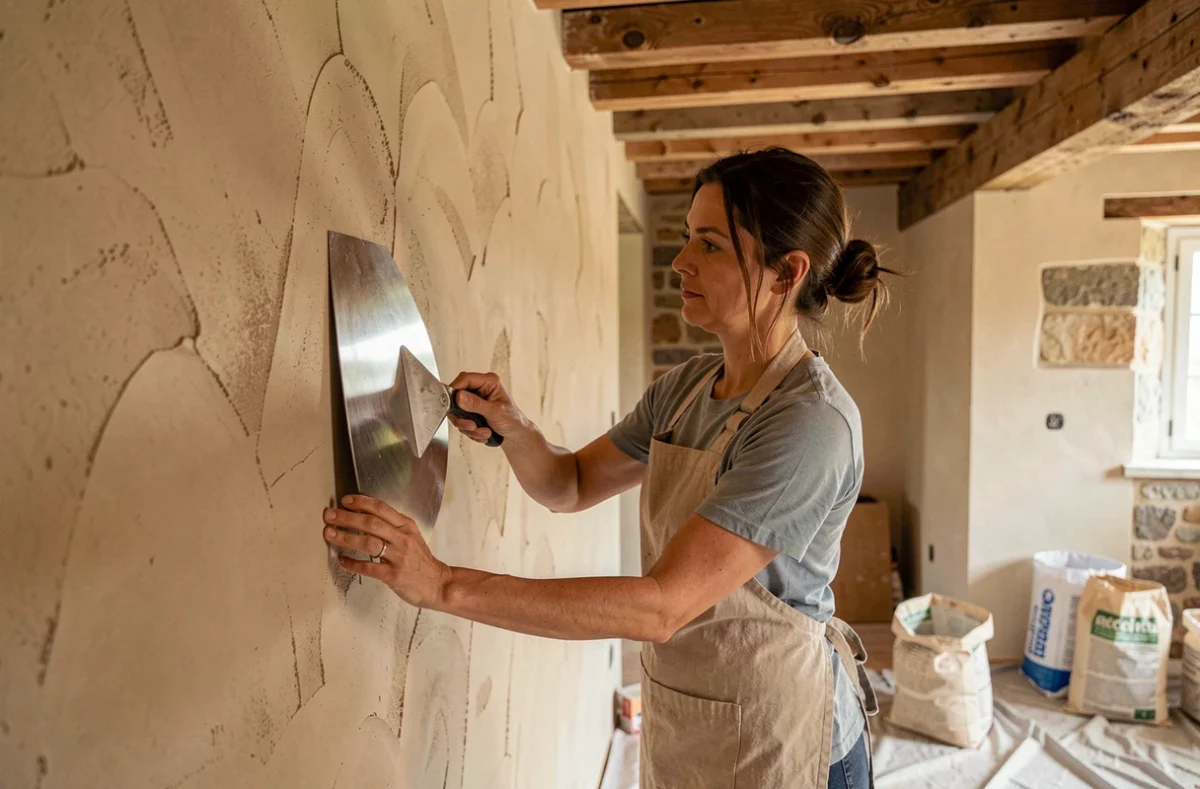
Replacing old glass wool with a bio-based insulation, applying a lime plaster on a stone wall, installing local wood flooring: ecological renovation relies on concrete material choices that are suited to the existing structure. These materials reduce the carbon footprint of the project, improve thermal comfort, and preserve indoor air quality. However, it is essential to know which materials are suitable for your project and how to avoid implementation mistakes.
Moisture Management: The Technical Trap That Materials Alone Cannot Solve
Have you noticed mold stains on a recently insulated wall? The problem rarely comes from the material itself. It arises from how the wall manages water vapor.
A bio-based insulation (wood fiber, hemp, cellulose wadding) allows water vapor to pass through, unlike polystyrene. This is an advantage, provided that the entire wall functions in the same way. If you install a vapor barrier that is too airtight on the inside or a waterproof coating on the outside, moisture becomes trapped in the insulation and degrades it within a few years.
The basic rule: the wall must be more permeable to water vapor towards the outside than towards the inside. In practice, this means choosing the insulation, vapor barrier, and finishing coat together. An old stone wall covered with a cement coating, for example, no longer breathes. Removing this coating and replacing it with a lime-hemp plaster before insulating from the inside completely changes the hygrothermal behavior of the wall.
As detailed in iDéco Maison’s renovation guide, each type of substrate requires a specific combination of materials. An efficient insulation installed on a poorly prepared wall will ultimately cause more problems than it solves.
Wood Fiber, Hemp, Cellulose Wadding: Which Bio-Based Insulation for Which Use
Not all ecological insulations are equal. Their performance depends on where you place them and the problem you are trying to solve.
Insulation of Lost Attics
Blown cellulose wadding is particularly suitable. It is quickly applied, conforms to every nook and cranny, and offers a good thermal performance/price ratio among bio-based options. It is made from recycled newspaper, treated against fire and insects.
Insulation of Walls from the Inside
Wood fiber panels remain the most versatile choice for walls. Their rigidity makes installation easier, and their high density provides an often-overlooked advantage: summer comfort. A dense material stores heat longer before releasing it, which delays temperature rise in the rooms.
Insulation of Walls from the Outside
Hemp concrete (a mixture of hemp shiv and lime) is applied as a thick coating on facades. It insulates, regulates humidity, and protects the old wall. Its implementation requires specific expertise, as the drying time is long and the weather conditions at the site matter.
- Bulk cellulose wadding: lost attics, floors, filling of boxes (affordable among bio-based options, very good thermal performance).
- Wood fiber panels: interior walls, sloping roofs (rigidity, high thermal lag, good summer comfort).
- Hemp concrete: old exterior walls made of stone or earth (hygrothermal regulation, compatibility with traditional structures).
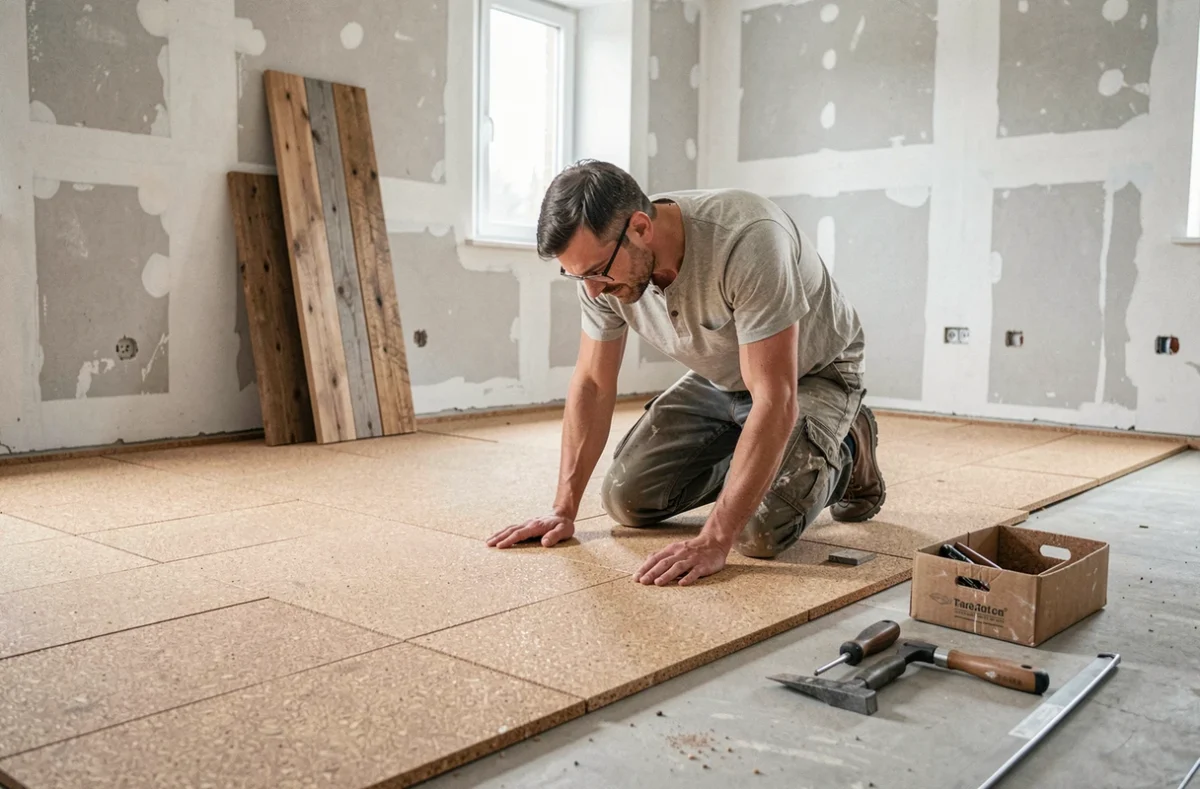
- Expanded cork: damp areas, foundations (rot-proof, compression-resistant, suitable for ground contact).
Extra Cost of Ecological Materials: What Subsidies Really Fund
Price remains the main barrier. For equivalent thermal performance, a bio-based insulation often costs more than a conventional insulation. Professionals in Île-de-France estimated in 2024 that wood fiber or hemp concrete exceeded the price of classic insulation with comparable thermal resistance.
National aids like MaPrimeRénov’ fund insulation work, but without specifically targeting the extra cost associated with choosing a bio-based material over a synthetic one. The amount of aid depends on the type of work and the household’s income, not on the nature of the material.
Two avenues can help reduce the gap. First, some local authorities offer additional aids that can value the choice of ecological materials. Check with your regional council or community of agglomeration. Second, national schemes are increasingly moving towards comprehensive renovations (insulation, ventilation, heating in a single project) rather than isolated actions. Bundling work can trigger larger aids than the sum of individual aids.
Ecological Finishing Materials: Coatings, Plasters, and Paints
Insulation grabs attention, but finishes are equally important for indoor air quality. Paints, plasters, floor coverings: these are the surfaces in direct contact with occupants.
A conventional paint emits volatile organic compounds (VOCs) for months after application. Lime-based, casein-based, or vegetable oil paints significantly reduce these emissions. Check for the A+ label on indoor air emissions, which is mandatory in France for construction and decoration products.
For floors, local solid wood (oak, chestnut) or natural linoleum (made from linseed oil, cork powder, and natural resins) are excellent replacements for PVC floors. Natural linoleum should not be confused with vinyl floors sold under the same name in mainstream commerce.
On the wall side, raw earth plasters offer a capacity to regulate ambient humidity that standard plasterboards do not achieve. They absorb excess humidity when the air is saturated and release it when it dries out. This buffering behavior improves comfort without any mechanical system.
Ten-Year Warranty and Reused Materials: A Point of Caution
Using reused materials (old beams, reclaimed bricks, terracotta tiles) reduces the environmental impact of the project. Why produce new when an existing material serves the same function?
The legal question deserves to be raised before the project. The artisan’s ten-year warranty covers issues related to the solidity of the work for ten years. With certified new materials, the insurer knows the technical characteristics. With reused materials, the lack of a standardized technical sheet can complicate insurance coverage.
- Ask the artisan if their ten-year insurance explicitly covers the use of reused materials.
- Keep all traceability on the origin and condition of the recovered materials (photos, measurements, provenance).
- Prefer reuse for non-structural elements (cladding, decoration, interior joinery) where the technical risk is lower.
Ecological renovation is not just about replacing one material with another labeled “green.” Each wall, each room, each local climate imposes its constraints. A well-installed bio-based insulation on a prepared substrate will last as long as a conventional solution, with healthier indoor air and a reduced carbon footprint in production. Choosing the right artisan, trained in these techniques, remains the determining factor.