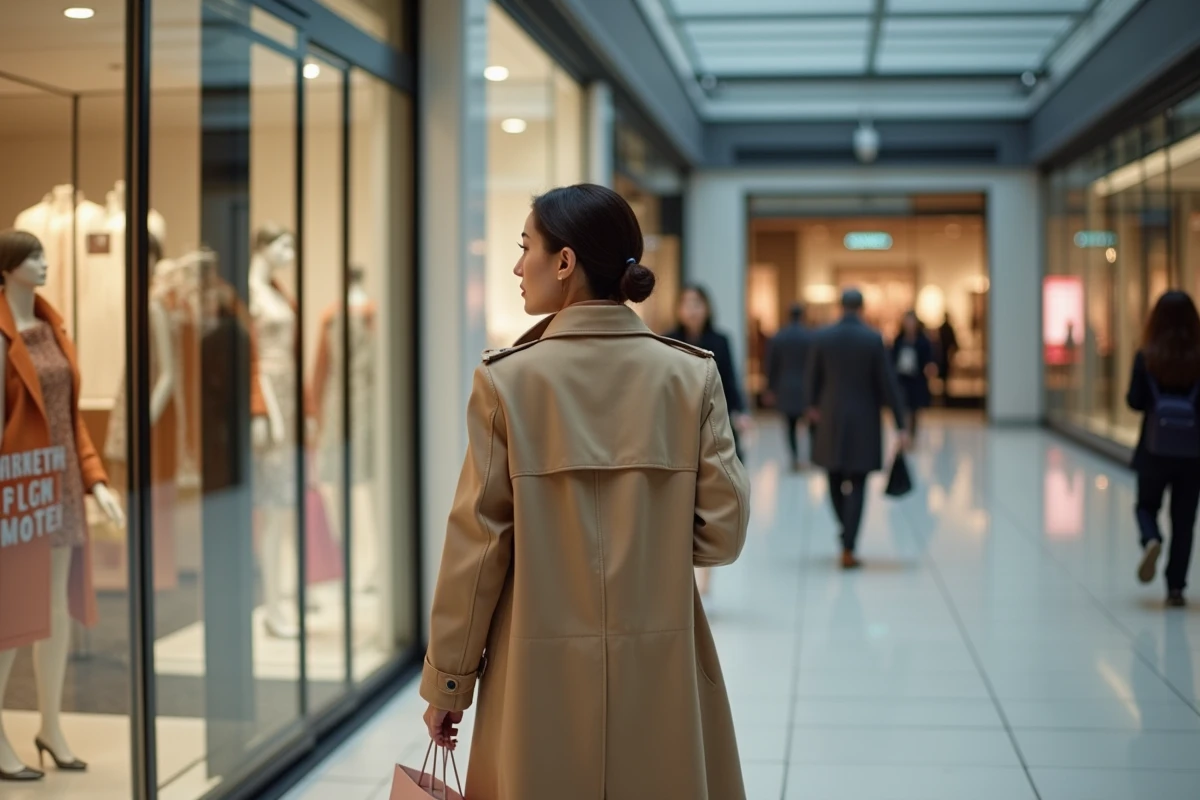
A disruptive calendar. Between 2024 and 2026, Zara will close several of its stores, first in Europe and Asia. The decisions of the Spanish giant are not made lightly: they follow a trend already initiated by other major textile brands. Shopping centers are buzzing, local merchants are questioning, and the entire sector is watching for the upcoming consequences. Behind these closures, economic and social stakes are coming to the forefront.
Closures at Zara: understanding the scope and reasons for a strategic decision
This wave of closures announced by Zara until 2026 is not just a simple adjustment. It is a decisive choice, driven by Inditex, that will reshape the landscape of brands in France. In Saint-Nazaire, Valence, Angoulême, and Nîmes, a sense of uncertainty prevails. Take the situation in Nîmes: a temporary closure “for renovation” is mentioned, but trust is lacking. Jobs, the attractiveness of the galleries, everything is being called into question.
Zara’s management justifies this shift: it aims to strengthen the most profitable stores and push even further into online commerce. This plan does not only concern Zara: Pull&Bear, Bershka, Stradivarius, other brands of the group, are also part of the equation, particularly in the same commercial areas. Some iconic addresses will disappear, like the Zara on the Champs-Élysées, but also more modest stores like the one in Strasbourg or the Rivetoile shopping center.
Local elected officials and industry professionals are meticulously analyzing the list of Zara closures. The selection criteria remain vague. Employees are waiting for answers about their future. Inditex emphasizes the evolution of consumption patterns, the explosion of online shopping, and the need to offer a renewed customer experience in its remaining stores.
Here are the main axes of this strategy:
- Fewer physical stores in France, to concentrate activity.
- Accelerated development of online sales and strengthening of logistics.
- Direct consequences for shopping centers in medium-sized cities as well as in large urban areas.
Zara’s transformation is neither isolated nor occasional. It is part of a global movement that is shaking up the industry’s codes, with digital now established as the main interface between brands and their customers.
What impacts for shopping centers and local businesses?
The announcement of Zara’s gradual withdrawal resonates like an earthquake for many shopping centers in France. In Saint-Nazaire, Valence, Strasbourg, Rivetoile, the disappearance of a heavyweight in the sector reshuffles the cards. Gallery managers see growing concern among independent merchants. When a giant leaves, foot traffic follows the same downward trend.
The consequences for local players are already being felt:
- A decrease in foot traffic in the aisles, which immediately affects neighboring businesses.
- Strong concerns regarding employment and the stability of commercial activity in the area.
- Questioning the attractiveness and capacity of commercial hubs to provide a sufficient experience without one of their usual drivers.
In cities like Nîmes or Angoulême, this withdrawal hits hard. The Ruban Bleu shopping center in Saint-Nazaire, long energized by Zara, must find other levers to continue attracting customers. Local businesses, already struggling against the rise of online sales, expect to see their customer base erode. Announcements of “temporary closures for renovation” also maintain uncertainty about the reopening and longevity of the affected stores.
As these departures occur, one question permeates the discussions: how to turn this situation into a new momentum to revitalize centers and help small merchants bounce back? Solutions remain to be built, as each closure leads to a reorganization of the local fabric.
The future of retail in the face of the transformation of the fashion sector
The closures of Zara stores in France signal more than just a retreat: they ring like a wake-up call in the fashion sector. Retail is living at the pace of a rapid transformation, driven by digital and new shopping behaviors. Customers, connected, want to switch from one channel to another seamlessly. Major brands, shaken, are seeking solutions.
The stores that remain open no longer simply line up racks of clothing: they are becoming experiential spaces, showcases where human connection takes precedence. In the face of declining foot traffic in some centers, service and personalization are taking precedence over mere square footage.
To adapt, the sector is relying on several levers:
- Redesigning spaces to meet the demand for speed and proximity.
- Strengthening the links between e-commerce platforms and physical stores.
- Highlighting a unique offering, focused on quality of service and diversity of collections.
The fashion retail sector, in full reconfiguration, is not disappearing from the urban landscape. It is transforming. The closure of Zara stores marks the advent of a hybrid model, where experience outweighs mere physical presence. It remains to be seen whether merchants and customers will be able to reinvent the encounter together and rekindle the desire to push open the doors of stores, where the city still vibrates.