
A dog that scratches incessantly, a cat that has ignored its bowl for two days, a rabbit whose fur is dulling: these small daily signals often go unnoticed until they become a real problem. Taking care of your pet relies less on grand occasional gestures and more on regular attention to concrete details. Here are the points to focus your vigilance on to keep your companion healthy.
Household products and air quality: underestimated domestic risks
Have you noticed that your cat sneezes after cleaning? It’s not trivial. The AVMA (American Veterinary Medical Association) reports that indoor air quality, cleaning products, candles, and air fresheners have a direct impact on the respiratory and dermatological health of animals.
A dog lives with its nose twenty centimeters from the ground. It inhales cleaning residues much more than you do. A cat licks its paws after walking on freshly mopped floors with diluted bleach. These repeated exposures can cause skin irritations, digestive issues, or chronic respiratory conditions.
Some simple habits can reduce these risks. You can learn more on Univers Animaux to delve deeper into the topic, but the basics come down to three actions:
- Ventilate the room for at least fifteen minutes after each cleaning, especially in winter when windows remain closed
- Replace air fresheners and scented diffusers with natural ventilation, as volatile compounds irritate the mucous membranes of cats and small rodents
- Always store cleaning products in a closed cabinet, including dishwasher tablets, which are toxic if ingested
This preventive approach costs nothing. Yet it avoids veterinary consultations related to dermatitis or chronic coughs whose origins remain unexplained for a long time.
Animal nutrition tailored to each age and species
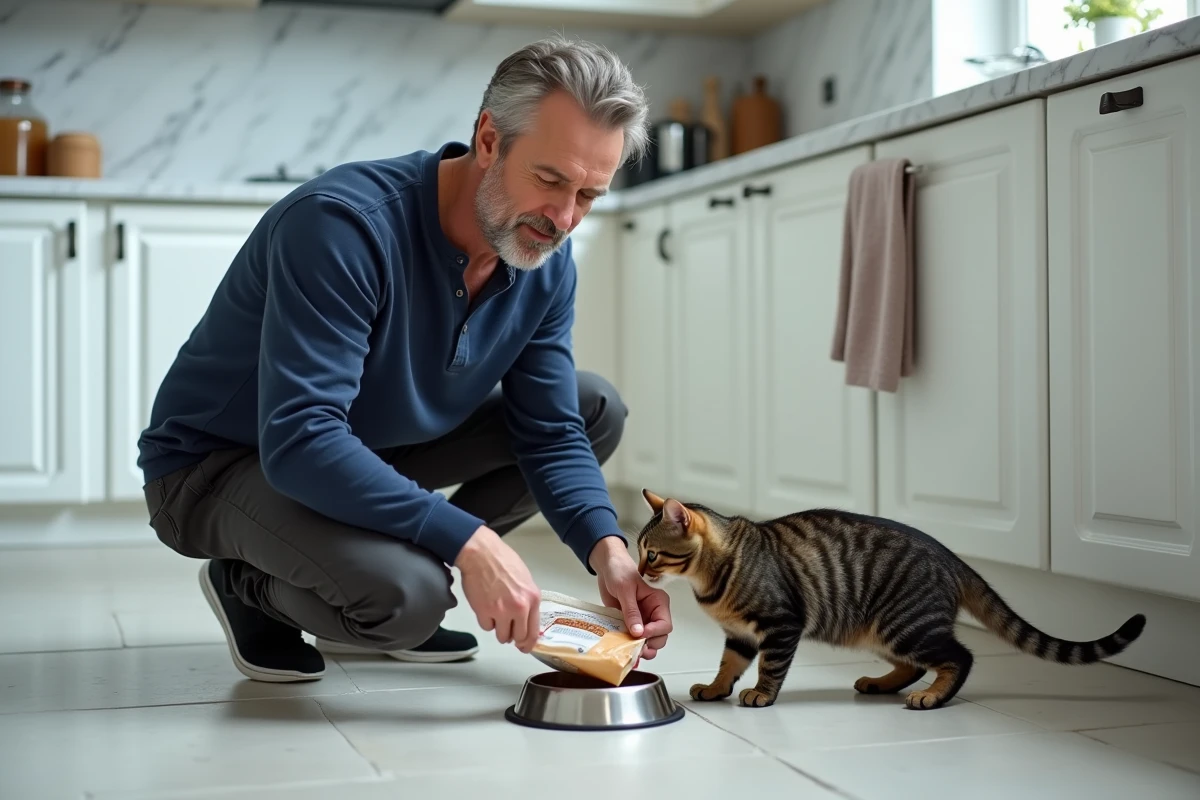
Feeding your pet is not just about filling a bowl. A growing kitten, a sedentary adult dog, and a senior rabbit have different needs. Nutrition must evolve with the age and activity level of the animal.
A common pitfall is feeding a cat exclusively with low-quality kibble high in grains. Cats remain strict carnivores. Their diet should contain a high proportion of animal proteins. Check the ingredient list: if the first item is a grain, the composition is unbalanced.
Overweight and obesity in dogs and cats
The Federation of European Veterinarians published recommendations on pet obesity in 2023. Overweight shortens lifespan, exacerbates joint problems, and promotes diabetes, particularly in cats.
Weighing daily rations with a measuring cup changes the game. Most owners serve by eye and overestimate the amounts. Your veterinarian can calculate the ration suitable for your pet’s ideal weight, not its current weight.
Treats also count. For a small dog, a single biscuit can represent a significant portion of daily caloric intake. Reserve them for training or break them into smaller pieces.
Veterinary prevention and deworming: a schedule to follow
Waiting for an animal to show symptoms before consulting often means intervening too late. Prevention relies on regular monitoring and a few systematic actions.
Deworming at each change of season
Dewormers do not eliminate worms: they break their reproductive cycle. A one-time treatment does not provide lasting protection. The standard recommendation is to deworm at each change of season, which means four times a year for an animal that goes outside regularly.
Intestinal worms do not only threaten your pet. Some can be transmitted to humans (this is called zoonosis), potentially affecting the liver, lungs, or eyes. This is a health issue for the whole family.
External antiparasitics: fleas and ticks
Fleas do not disappear in winter in a heated home. Regular treatment is necessary year-round. Spot-on treatments, collars, or tablets: the choice depends on the species, weight, and lifestyle. A product intended for dogs can be toxic to a cat, especially those containing permethrin.
Also consider treating the environment. Fleas lay eggs in textiles, cushions, and baseboards. Without treating the home, reinfestation is almost guaranteed.
Connected devices for pets: useful but to be moderated
GPS collars, automatic feeders, interactive cameras, smart toys: the “pet tech” market has been rapidly growing since 2022 according to Euromonitor International. These tools facilitate monitoring of weight, physical activity, and eating habits.
However, there is a downside. The American Pet Products Association notes that too frequent solicitations can generate stress in some animals. A feeder that makes a sound every hour, a camera that talks to a dog left alone: these remote interactions do not replace presence and can exacerbate separation anxiety.
The WSAVA (World Small Animal Veterinary Association) has dedicated several publications between 2022 and 2024 to the topic of post-pandemic separation anxiety, a phenomenon amplified by the return to the office after months of remote work.
Use technology as a complement, not a substitute. An activity tracker helps spot a decrease in mobility in an older dog. A camera allows you to check a cat’s behavior in your absence. But direct interaction, physical play, and socialization remain irreplaceable.
Each animal has its own temperament, needs related to its species, age, and history. Observing its habits every day remains the best preventive tool, well before any gadget. A change in appetite, a modification in sleep, or unusual behavior always deserves prompt attention, even a call to the veterinarian.